









How Emerging Technologies Are Transforming the Future of Sports

The global sports industry is entering a new era of technological innovation. From artificial intelligence and smart wearables to robotics, immersive technologies, and advanced analytics, emerging technologies are revolutionizing how athletes train, how teams compete, and how fans experience their favorite sports.
Traditionally, sporting success depended heavily on physical ability, coaching expertise, and experience. Today, data-driven insights, connected devices, and intelligent systems are playing an increasingly important role in improving athletic performance, optimizing training strategies, supporting injury prevention, and transforming sports management.
As technology continues to evolve, its integration into sports is creating new opportunities for athletes, coaches, sports organizations, technology developers, and fans worldwide.
1. Artificial Intelligence: Revolutionizing Sports Performance and Strategy
Artificial Intelligence (AI) and Machine Learning (ML) are among the most influential technologies transforming modern sports.
AI-powered platforms can analyze large volumes of performance data, identify patterns, and generate valuable insights that help coaches and athletes make informed decisions.
Key applications of AI in sports include:
- Performance Analysis: Evaluating athletes’ movements, speed, accuracy, and overall performance.
- Smart Coaching: Supporting personalized training programs based on individual performance data.
- Match Strategy: Analyzing opponents, player positioning, and tactical patterns.
- Talent Identification: Helping scouts identify promising athletes using performance metrics.
- Injury-Risk Assessment: Identifying workload and movement patterns that may indicate increased injury risk.
AI is helping sports organizations move toward more personalized, precise, and data-driven approaches to training and competition.
2. Wearable Technology and IoT: Making Athlete Monitoring Smarter
Wearable technology and the Internet of Things (IoT) are changing how athletes monitor their physical condition, fitness levels, and training performance.
Devices such as smartwatches, GPS trackers, biometric sensors, and connected fitness equipment can collect valuable information during training sessions and competitions.
These technologies help monitor:
- Heart rate and cardiovascular activity
- Running speed and distance
- Movement patterns and physical workload
- Sleep quality and recovery indicators
- Training intensity and overall fitness trends
When combined with analytics, wearable data helps sports professionals adjust training programs, monitor recovery, and make more informed decisions about athlete readiness.
As wearable technology becomes more sophisticated, its applications are expanding beyond professional sports to fitness enthusiasts, sports academies, and amateur athletes.
3. Robotics and Smart Training Equipment: The Next Generation of Sports Training
Robotics and intelligent training equipment are introducing new possibilities for athletic development and rehabilitation.
Automated systems can deliver repeatable training exercises, simulate specific sporting situations, and support technical skill development.
For example, robotic ball-launching systems can help players practice their reactions, timing, positioning, and accuracy through controlled drills.
Other applications include:
- Automated ball-feeding and training equipment
- Robotic rehabilitation and assisted movement systems
- Smart exercise machines with adaptive resistance
- Motion-tracking systems for technique assessment
- Automated sports facility maintenance
These innovations can improve training consistency and provide athletes with additional opportunities to practice specialized skills.
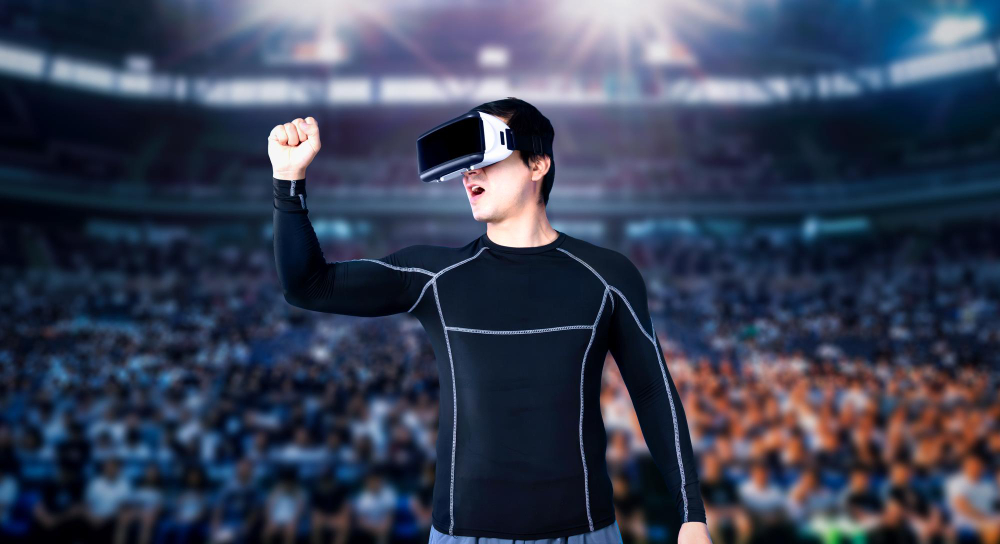
4. Augmented Reality and Virtual Reality: Creating Immersive Sports Experiences
Augmented Reality (AR) and Virtual Reality (VR) are transforming both athletic training and spectator engagement.
VR technology enables athletes to experience simulated match environments, practice decision-making, and visualize complex sporting scenarios in a controlled setting.
AR technology can overlay digital information onto real-world environments, helping create interactive training sessions and enhanced viewing experiences.
Major applications include:
- Virtual match simulations and tactical training
- Immersive environments for skill development
- Interactive stadium experiences
- AR-enabled sports broadcasts and statistics
- Virtual fan engagement and digital sports experiences
These technologies have the potential to make sports training more interactive while providing audiences with new ways to connect with their favorite teams and athletes.
5. Big Data and Predictive Analytics: Turning Information into Competitive Advantage
Data analytics is becoming an essential component of modern sports management.
Sports organizations generate large volumes of data through matches, training sessions, connected devices, ticketing platforms, and digital fan interactions.
Advanced analytics tools process this information to support strategic decisions.
Key applications include:
- Player and team performance evaluation
- Match and tactical analysis
- Athlete workload management
- Recruitment and talent scouting
- Audience engagement analysis
- Sports business and operational planning
Computer vision technologies can also analyze video footage to track player movements, identify tactical formations, and generate detailed match insights.
Predictive models can identify possible performance trends or workload-related risk factors. However, their results should complement professional judgment rather than be treated as guaranteed outcomes.
6. Smart Stadiums and Digital Fan Engagement: Redefining the Spectator Experience
The transformation of sports extends beyond athletes and playing fields.
Modern stadiums are increasingly adopting connected technologies to improve venue management, safety, operational efficiency, and spectator convenience.
Technologies such as IoT sensors, 5G networks, AI-based analytics, digital ticketing systems, and mobile applications can contribute to more intelligent stadium operations.
Key innovations include:
- Contactless ticketing and access management
- Real-time crowd monitoring and navigation
- Intelligent security and surveillance systems
- Personalized fan engagement through mobile applications
- Interactive displays and digital sports content
- Smart lighting and energy management
Such solutions can improve the overall visitor experience while helping stadium operators manage infrastructure and resources more efficiently.
7. Real-World Applications of Emerging Technologies in Sports
The impact of emerging technologies can already be seen across major sporting events and organizations.
FIFA World Cup 2026: FIFA introduced advanced semi-automated offside technology, 3D player models, and AI-supported match analysis systems to improve officiating and provide teams with additional analytical capabilities.
Olympic Games: The International Olympic Committee has introduced an Olympic AI Agenda to explore responsible AI applications in athletic performance, event operations, sustainability, athlete protection, and fan engagement.
Sports Medicine and Rehabilitation: Research into AI-enabled wearables is expanding their potential applications in biomechanics, movement assessment, rehabilitation monitoring, and athlete workload management.
These developments demonstrate how emerging technologies are moving from experimental applications toward wider implementation in professional sports.
8. Challenges and Opportunities in Sports Technology
Despite its growing benefits, the adoption of advanced technology in sports presents several important challenges.
These include:
- Protection and responsible use of athlete data
- High implementation and maintenance costs
- Accuracy, transparency, and potential bias in AI systems
- Unequal access to advanced training technologies
- Integration with existing sporting infrastructure
- The need for technical expertise and professional oversight
Addressing these challenges will be essential to ensuring that technology supports fair competition, athlete well-being, and wider participation.
At the same time, these challenges are creating opportunities for technology startups, research institutions, equipment manufacturers, sports academies, and digital solution providers.
9. The Future of Sports: Intelligent, Connected and Data-Driven
The future of sports will increasingly depend on the convergence of advanced technologies.
AI-powered coaching assistants, connected sports equipment, digital twins, automated performance analysis, immersive training platforms, and intelligent stadium systems are expected to play growing roles in the sports ecosystem.
As these technologies become more accessible, their benefits could expand from elite international competitions to schools, sports academies, community programs, and recreational activities.
The goal is not to replace human expertise, athletic skill, or the competitive spirit of sports. Instead, technology can empower athletes, coaches, officials, and organizers with better tools and information.
Conclusion
Emerging technologies are fundamentally changing the way sports are played, managed, and experienced.
From AI-driven performance analysis and wearable fitness monitoring to robotics, virtual reality, and smart stadiums, technological innovation is opening new possibilities across the sporting industry.
As the sports ecosystem becomes increasingly connected and data-driven, collaboration between technology companies, sporting organizations, researchers, and innovators will play an important role in shaping its future.
The future of sports is not just about faster athletes and stronger teams. It is about smarter training, more informed decisions, improved accessibility, and enhanced experiences powered by technology.


Post Comment